

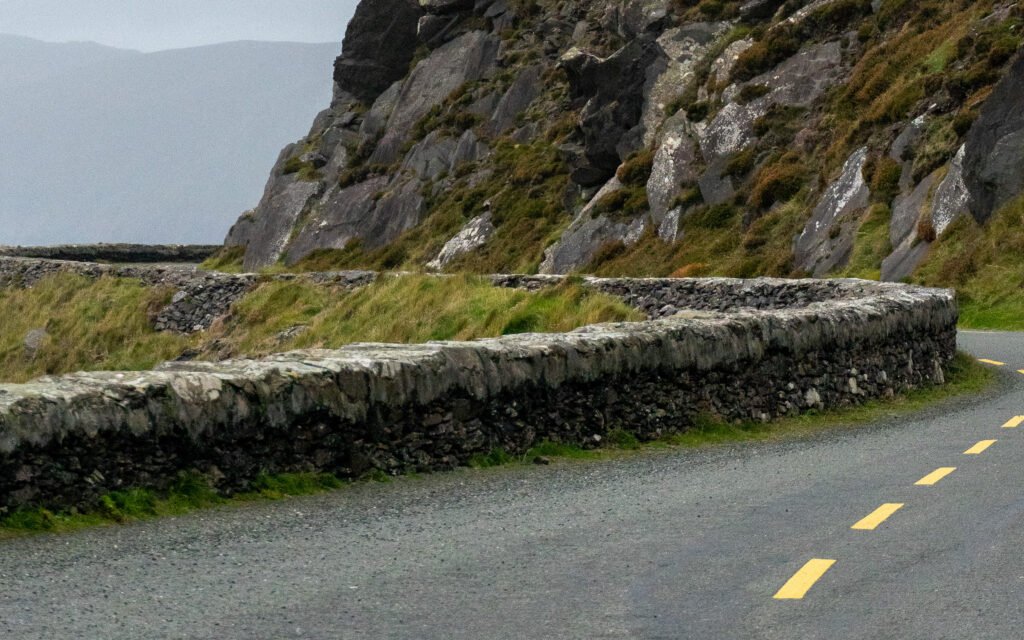
Driving Ireland’s west coast was absolutely worth renting a car for. It let us check surf conditions, stop at smaller coastal towns and change plans along the way. I’d rent again, although I’d leave more breathing room between some of the longer drives.
Mitch did all the driving; I handled navigation and much of the planning. I loved the freedom the car gave us, while he also had the work of adjusting to the left side of the road, judging narrow spaces and getting us to the next hotel.
We visited in October 2026, driving from Dublin Airport through Northern Ireland to Bundoran, then south through Galway, the Cliffs of Moher area and Dingle before returning to Dublin. These are the lessons from that particular route, including what worked and what I’d reconsider.
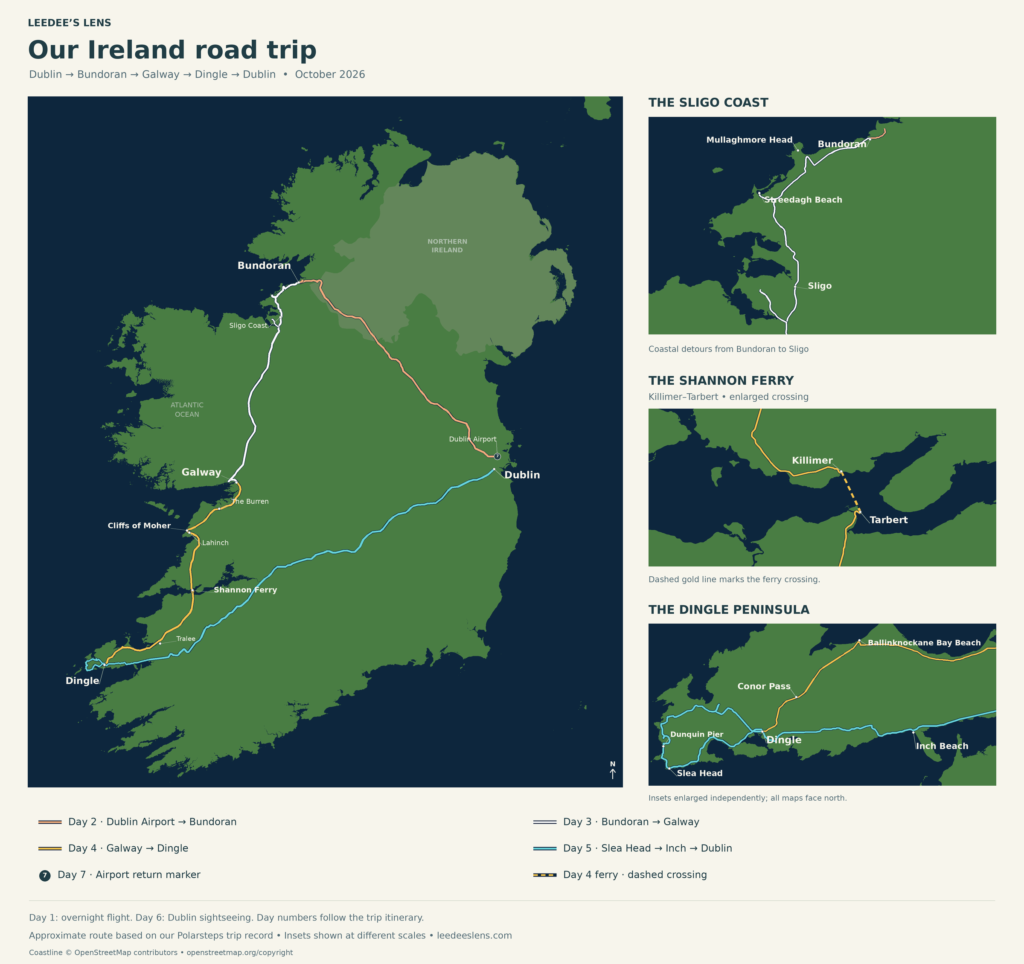
Our route and what having a car made possible
Our rental covered 1,077 km, or about 669 miles, including the airport journeys and local exploring. For the complete sequence of stops, see our 7-Day Ireland Road Trip Itinerary.
The car made smaller stops possible without having to arrange each one in advance. Around Bundoran and Sligo, we could check beaches and surf conditions. Farther south, we could stop for a photograph, choose Lahinch for lunch or take the Shannon car ferry on our way toward Dingle.
Moving between towns also made sense for the places we wanted to see. Staying in one base would have meant substantial backtracking. The tradeoff was packing up and moving on, even when we might have enjoyed more time somewhere.
Why we chose a seven-seat automatic SUV
We chose the seven-seat size so Mitch’s surfboard and our luggage could fit inside the vehicle. We wanted to avoid bringing a roof rack, attaching it to our rental and leaving the board outside the car when we parked. Being able to lock everything inside was a practical reason to choose a larger vehicle.
We received a Škoda Kodiaq automatic SUV, which took diesel. If we hadn’t needed that interior space, I’d consider a smaller vehicle to make maneuvering and parking easier.
Our National rental ran from October 11–16, 2026. The final bill was €571.39, charged as $642.47, including coverage, taxes and fees. Our agreement included Collision Damage Waiver and Roadside Assistance Protection. We were nervous about driving on the left and navigating narrow roads, so we chose the additional rental coverage for peace of mind. The full reservation and spending context is in our Ireland Road Trip Booking Guide.
Pickup was easy; returning was slightly more complicated
The National terminal desk was easy to find by following the airport signs. We then followed signage in the parking garage and used the key fob to locate our exact vehicle within the National section.
We returned the car to an off-airport depot and took a short shuttle to the terminal, which we hadn’t expected. Be sure to ask at the terminal desk where you’ll need to return the car—it may be a different location from pickup.
What took concentration on Irish roads
For Mitch, the challenge went beyond remembering to drive on the left. Blind curves and narrow roads required attention, as did judging the left side of a larger vehicle beside stone walls, other cars and parking-garage columns. Turning also meant consciously checking that he entered the correct lane.
His confidence improved over the course of our trip, but decades of driving on the right didn’t disappear over a few days. He enjoyed exploring a new town each day but still had mixed feelings about the effort of doing all the driving.
The roundabouts became straightforward, and they seemed to keep traffic moving well. Tight spaces and left-side clearance took more concentration.
Some posted speed limits also felt surprisingly fast for the road in front of us. Another adjustment for U.S. drivers: don’t carry over the habit of turning right on red.
Our route passed through Northern Ireland
Our drive from Dublin Airport to Bundoran took us through Northern Ireland. If your route does the same, there are a few things worth checking before you leave.
National’s Dublin Airport policy currently allows travel into Northern Ireland without a cross-border fee. Check your own rental’s permission and coverage before heading across. You’ll also need to watch the speed signs: the Republic uses km/h, while Northern Ireland uses mph.
Don’t forget to check the UK entry requirements for your trip, including whether you need an ETA. Those requirements can still apply when you enter Northern Ireland by road, even without a border checkpoint. The official UK guidance explains who needs one and who is exempt.
Why the Shannon car ferry was worth it
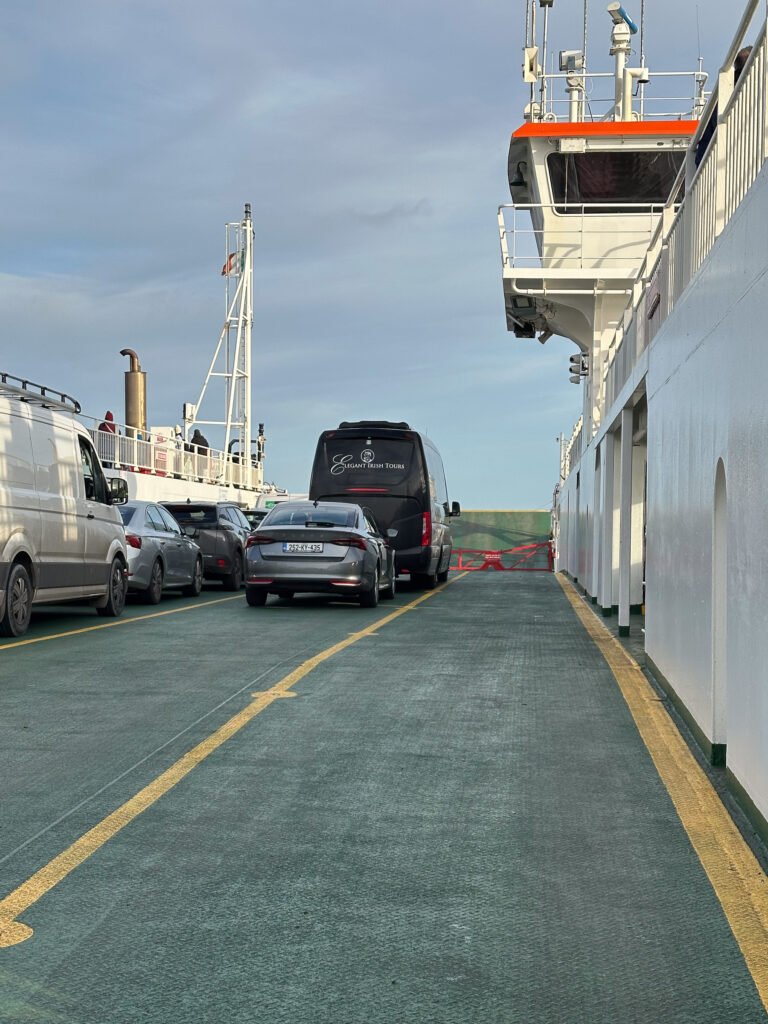
The Killimer–Tarbert Shannon ferry fit naturally between our Cliffs of Moher and Lahinch stops and the onward journey toward Dingle. I bought the ticket online after we left Lahinch.
We paid €22.50, charged as $25.24, for the car and passengers. We reached Killimer around 4:40 p.m. and took the 5 p.m. sailing. The terminal had restrooms and a small shop for snacks, drinks and souvenirs.
The ferry let us cross the estuary instead of driving around via Limerick. Shannon Ferries puts the terminal-to-terminal saving at 137 km (about 85 miles). It also gave Mitch a welcome break after he hadn’t slept well the previous night. We both thought it was worth the price.
Check the timetable for your travel month before setting off. An online ticket doesn’t reserve a particular sailing time, and you need to buy it before boarding.
How weather tested our itinerary flexibility
Doolin Ferry Co. emailed the day before our booked Cliffs of Moher cruise to cancel because of high winds. We were offered alternatives, including rescheduling or a refund, but our hotel sequence made changing the day difficult. We chose the refund.
We still had a worthwhile land visit to the cliffs in relatively sunny, clear conditions. Afterward, we decided to keep driving south and ate lunch in Lahinch rather than heading back toward Doolin as we’d originally planned.
The following day’s winds also changed our Dingle plans. We made a brief stop at Inch Beach, but Mitch didn’t surf there or anywhere else on this trip. The board had traveled with us; the conditions and timing never came together.
We could change a lunch stop or skip an overlook, but moving an activity to another day was harder. By then, we were usually heading toward a different town and our next booked hotel. Rescheduling the Cliffs cruise, for example, would have meant changing more than just the boat ticket.
I’d still book our hotels ahead. Next time, I’d plan fewer stops between them so a change of plans doesn’t make the rest of the day feel rushed.
Conor Pass and Slea Head needed more than driving time
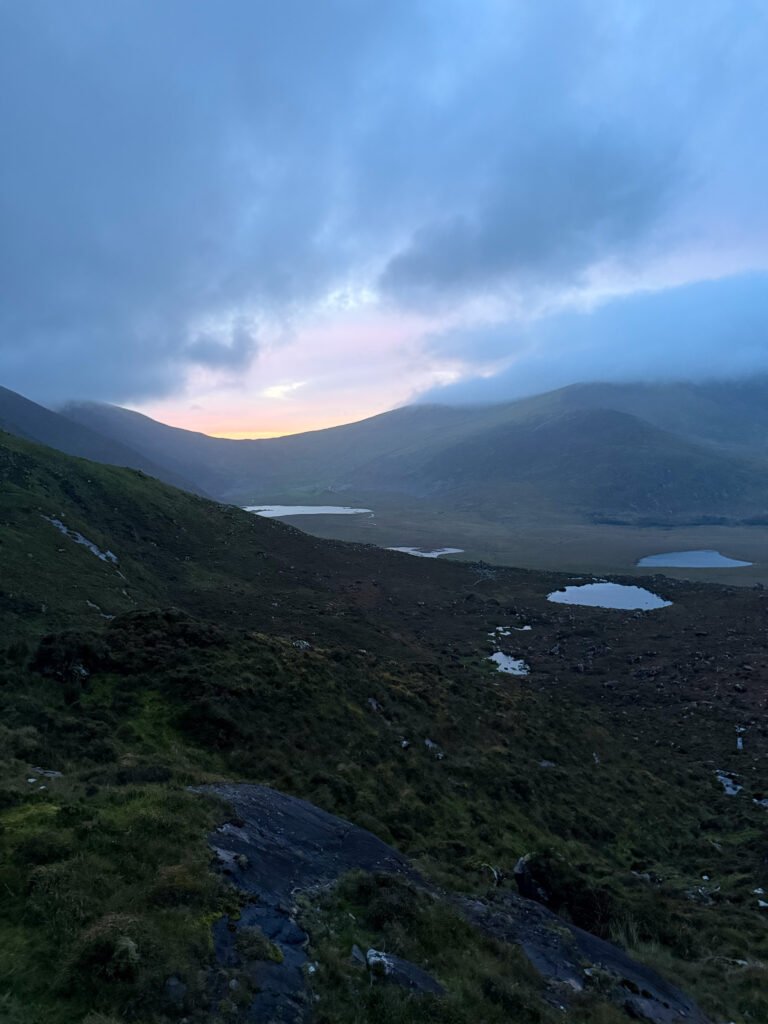
Conor Pass was an unexpected part of our journey toward Dingle. We stopped for photographs and enjoyed the waterfall and viewpoint, although the light was fading. Surprisingly, I didn’t get carsick despite usually being susceptible on twisty roads.
I would have liked to see it again in daylight. The following day, we chose the southern route through Annascaul for different scenery instead. My advice: allow extra time beyond the estimated drive so you can pull over at viewpoints, take photographs or simply enjoy the scenery.
Slea Head was shaped by the wind
We drove Slea Head clockwise to follow the local visitor guidance and help reduce encounters with oncoming visitor traffic on the narrow roads. Follow the signs rather than navigation shortcuts, and remember that local traffic can still come the other way. Thankfully, we didn’t meet another vehicle at the points where the road was too narrow for two cars to pass.
The wind had a much bigger effect on our stops. At one location, opening and closing the car doors was difficult. We skipped the planned Dunmore Head and Coumeenoole stops and shortened others, but still spent time at Dunquin Pier and several overlooks.
We also had the drive to Dublin ahead of us. Combining Slea Head, lunch, a brief Inch Beach stop and that transfer was perhaps the day I’d most reconsider. It left little room to linger, and we reached Dublin around 6 p.m. after encountering heavy traffic.
Fuel, tolls and parking added smaller decisions
Our Kodiaq used diesel, and we returned it with a full tank. One fill-up in Dingle cost €84, charged as $94.04, and our second fill-up cost €44.29.
On our first drive, we paid two €1.80 tolls, each charged as $2.02. You can pay by card at some tollbooths. Ask at pickup how your rental company handles tolls.
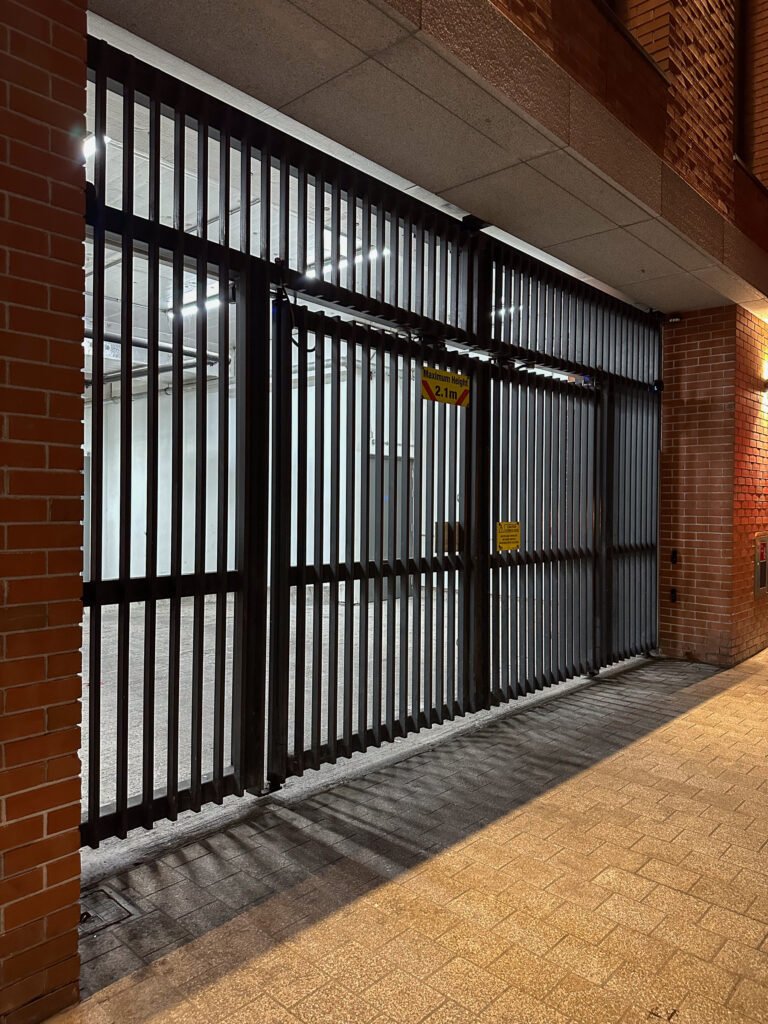
Check the parking situation at each hotel before you book, including where you’ll park, what it costs and how to reach the entrance. The Western in Galway had an underground garage, with reception explaining that double-parking could require coordination. At Hyatt Centric The Liberties, our two-night parking cost €42, charged as $47.07.
Finding the entrance mattered as much as knowing parking existed. We were searching for the Hyatt garage while sitting in Dublin traffic. Arden House in Dingle was also difficult to locate using both Apple Maps and Google Maps, especially arriving after dark.
Next time, I’d save the precise hotel and parking entrances before starting each transfer. The hotel details are in our booking guide; this was a small preparation step that would have helped on arrival.
Would we rent a car again?
Yes. I’d rent again for a route built around smaller west-coast towns, beaches and scenic stops. Having the car let us explore at our own pace and change individual stops along the way.
Having a list of possible stops helped. When the weather changed, we already had other ideas to choose from instead of starting our research from scratch.
Next time, I’d put fewer of those stops into each day. We enjoyed exploring around Bundoran and Sligo, but spending more time there meant dropping Kylemore Abbey and Sky Road later in the trip. On the Dingle Peninsula, I’d give Slea Head more time rather than combining it with the long drive to Dublin.
For another trip, I’d consider more time in the smaller towns and a better mix of long and short driving days. An intermediate night between Dingle and Dublin, or flights through Shannon for a more western route, are possibilities I’d investigate.
The vehicle choice would depend on what we brought. With the surfboard, we had a reason for the larger SUV. Without that space requirement, I’d consider something smaller. I’m glad we rented a car; I’d simply give us more time to enjoy what we rented it to reach.